A skin fade is the sharpest-looking cut in the shop and the fastest to expire. If you are booking your first one at Faded On Main in China Grove, go in knowing both halves of that bargain. Nothing else looks as clean on day one, and nothing else shows two weeks of growth as honestly.
The fade works by blending hair from skin, or near it, up through gradually longer lengths with no visible line. Because the shortest part starts at zero, every day of growth is visible immediately. Maintaining it is not vanity or upselling. It is arithmetic: a style built on the shortest possible starting point has the least room to hide regrowth.
What happens in the chair, step by step
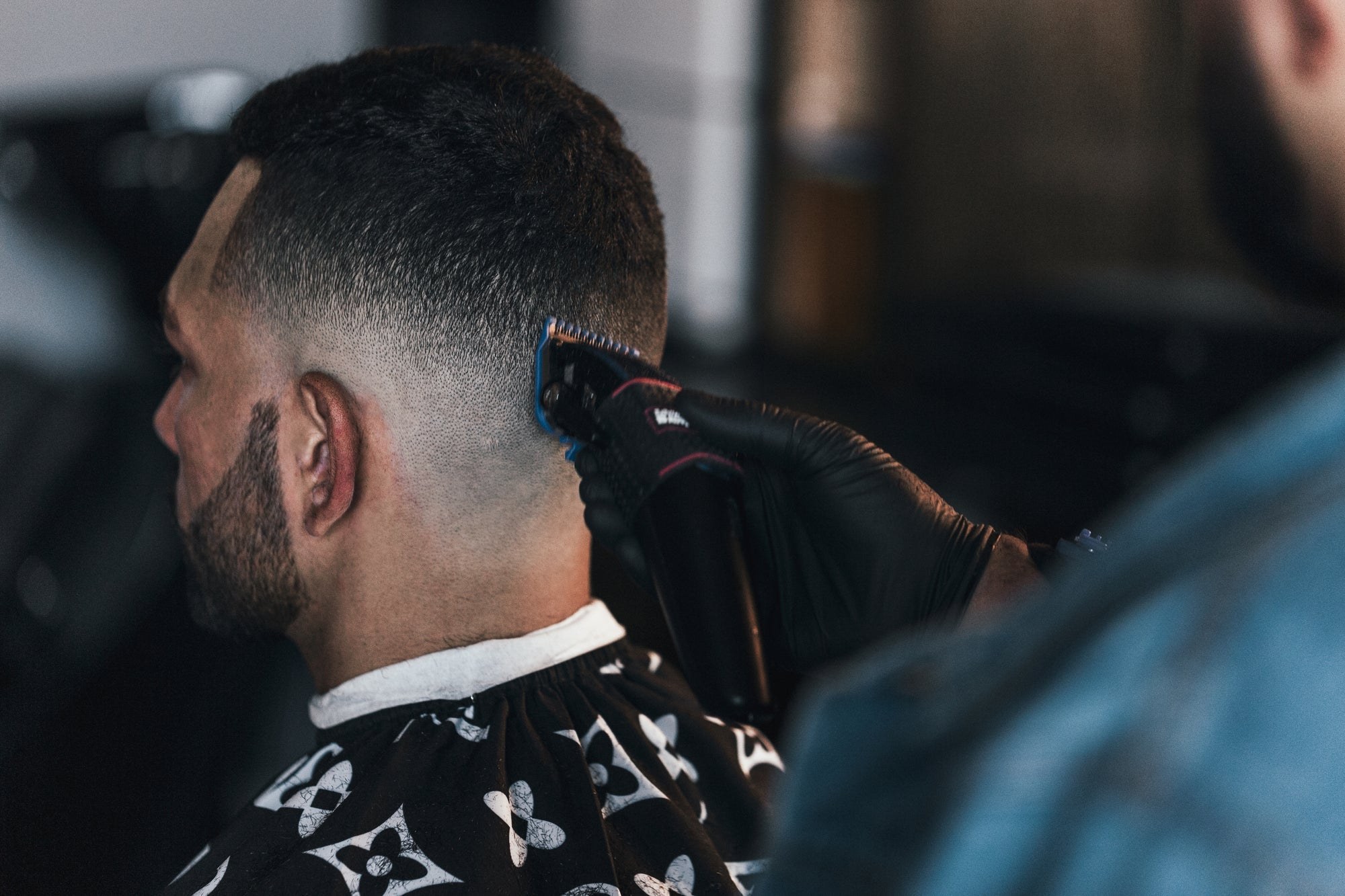
Your first appointment follows a set order, and knowing it removes the guesswork. The barber starts by establishing the guideline, the height where the skin section will end and the blend begin. That height, low, mid, or high, is the main decision of the cut, and it changes how much of the natural hairline and head shape shows.
From there the work is blending: several clipper lengths, each overlapping the last, then detail work with trimmers and often a foil shaver or razor to take the bottom truly to skin. Expect the barber to turn the chair, check the blend in the mirror from a distance, and return to small sections. A good fade is checked more than it is cut.
- Choose the height. Decide low, mid, or high with your barber, based on head shape, hairline, and how bold you want the contrast.
- Set the guideline. The barber marks where skin ends and blend begins; this line anchors everything above it.
- Build the blend. Progressively longer guards overlap in bands, each softening the step below it.
- Detail the bottom. Trimmers, foil, or razor take the lowest section to true skin and sharpen the hairline and neckline.
- Cut and connect the top. The top is shaped to meet the blend so the silhouette reads as one cut.
- Check from a distance. The barber views the fade in the mirror and under different light, then corrects any dark spots.
- Book the return. Set the next visit two to three weeks out before you leave, while the rhythm is decided.
What grows back first, and what it looks like
The skin section shows stubble within days, a soft shadow by the end of week one. The blend still reads as a fade, but the crisp contrast that made it striking is fading with it. By week two the bottom has filled in enough that most people would call it a short taper rather than a skin fade. The top, meanwhile, has barely changed.
Growth does not arrive evenly. The neckline and around the ears usually look untidy first, because those edges were the sharpest. This is why some men book a midpoint cleanup covering just the outline, stretching a full fade appointment to every three weeks instead of every two, while keeping the edges honest in between.
The honest maintenance schedule
Plan on a full fade every two to three weeks to keep it looking like the cut you paid for. Men who stretch to four or five weeks are not maintaining a skin fade; they are growing one out and recutting it, which is a fine choice as long as it is a choice. Booking the next appointment while you are still in the shop, on the same weekday rhythm, is how regulars keep the schedule without thinking about it.
At home, do almost nothing to the sides. Home trimmers on a blend almost always cut a line into it. Wash normally, keep the scalp moisturized in winter, and use sunscreen or a hat on the exposed skin during long days outside, because freshly faded skin burns faster than skin that hair has covered for years.
Keeping it up between visits
Growth is steady and unsentimental. Scalp hair grows roughly half an inch a month for most adults, a little faster in warm months and a little slower with age. That simple rate explains most maintenance schedules. Two weeks after a short cut the outline has moved noticeably, and by four to six weeks the shape the barber built has changed enough that styling takes longer each morning.
Hair changes with the seasons in Piedmont North Carolina. Summer humidity swells hair and makes edges look soft sooner. Winter air dries the scalp and can make the same cut feel tighter and itchier. Pollen season adds its own problem in spring, when hats, rinsing, and frequent washing all affect how a cut sits. A schedule that works in January may need a small adjustment by July, and that is normal.
Common questions
Does a skin fade suit every head?
Most, with the height adjusted. Scars, moles, and strong bumps show more with skin-level sides, and a good barber will place the blend to work with them rather than pretend they are not there.
Will my scalp be irritated the first time?
Mild sensitivity for a day is common where skin has not been exposed before. It settles quickly; persistent bumps or rash are worth mentioning at your next visit so the finishing method can change.
Can I stretch appointments with a cleanup?
Yes. A neckline and edge cleanup at the midpoint keeps things tidy and lets many men run a three-week full-cut cycle instead of two, without the overgrown look.
Photos in this guide are representative stock images.
← All guides from Faded On Main← Back to Faded On Main